Shutdown Politics & the Risks of Changing the Narrative

Shutdown Politics & the Risks of Changing the Narrative

The RadioDSG Election Protection News, September 13

FEATURE

The RadioDSG Election Protection News, September 8

A look at the top stories over the past few weeks and months

9/9

US Justice Dept considers handing over voter roll data for criminal probes, documents show

The U.S. Justice Department is in talks with Homeland Security Investigations about transferring the sensitive voter roll data it has collected from states for use in criminal and immigration-related investigations, according to government documents seen by Reuters.

9/8

Judge OKs settlement in North Carolina voter registration lawsuit by Justice Department

Federal and North Carolina laws have directed that since 2004 election officials request registrants provide a voter’s driver’s license number or the last four digits of their Social Security number. For about a decade, however, the state’s registration form failed to make clear voters were supposed to provide a number if they had one, resulting in records that indicate numerical IDs have never been provided.

8/25

Judge Orders New Congressional Map in Utah

A Utah judge ruled on Monday that the state must redraw its congressional map ahead of the 2026 U.S. midterm elections, saying Utah’s Republican-controlled legislature had overstepped in overruling an earlier ballot measure passed by voters against drawing districts to favor any party.

“Plaintiffs have proven, as a matter of law, that the Legislature unconstitutionally repealed Proposition 4, and enacted SB 200, in violation of the people’s fundamental right to reform redistricting in Utah and to prohibit partisan gerrymandering,” Third District Court Judge Dianna Gibson said in the ruling

7/29

John R. Lewis Voting Rights Advancement Act Reintroduced

 Senate Democrats reintroduced a bill Tuesday to restore and expand protections enshrined in the Voting Rights Act of 1965, their latest long-shot attempt to revive the landmark law just days before its 60th anniversary and at a time of renewed debate over the future administration of American elections.

Sen. Raphael Warnock of Georgia unveiled the measure, titled the John R. Lewis Voting Rights Advancement Act, with the backing of Democratic leaders. The bill stands little chance of passage in the Republican-led Congress, but it provides the clearest articulation of Democrats’ agenda on voting rights and election reform.

7/24

Supreme Court blocks North Dakota redistricting ruling that would gut key part of Voting Rights Act

The Supreme Court on Thursday blocked a lower-court ruling in a redistricting dispute in North Dakota that would gut a landmark federal civil rights law for millions of people.

The justices indicated in an unsigned order that they are likely to take up a federal appeals court ruling that would eliminate the most common path people and civil rights groups use to sue under a key provision of the 60-year-old Voting Rights Act.

7/17

Florida congressional districts that eliminated a majority-Black seat upheld by state Supreme Court

Florida’s Supreme Court on Thursday upheld the state’s current congressional redistricting map, rejecting a challenge over the elimination of a majority-Black district in north Florida that was pushed by Republican Gov. Ron DeSantis.

The court, dominated by DeSantis appointees, ruled that restoration of the district that previously united Black communities from Jacksonville to west of Tallahassee, or across 200 miles (322 kilometers), would amount to impermissible racial gerrymandering. That, the majority ruled, violates the Constitution’s equal protection guarantees.

6/27

Supreme Court Reopens Louisiana Racial Gerrymandering Case

The Supreme Court on Friday put off deciding whether to uphold a Louisiana map that added a second majority-Black congressional district in the state, saying it would rehear the case in its next term.

States must thread a needle when drawing electoral districts. The landmark Voting Rights Act requires states in some circumstances to consider race as a means to redress discriminatory electoral practices. But maps that are explicitly based on race violate the 14th Amendment’s Equal Protection Clause, which requires all people to be treated equally.

7/28

Wave of Election Law & Voting Restrictions Pushed in State Legislatures

In 2025, we’ve seen a significant shift in the makeup of election laws enacted by state legislatures. Since our team began systematically tracking legislation in all 50 states in 2021, each year we saw more than twice as many new laws expanding access to the ballot as new laws restricting it. That trend ended this year, with only one in three new laws improving voter access and election administration in 2025, the lowest percentage we’ve ever recorded.

The team behind our Election Policy Tracker identified several significant trends in restrictive legislation this year, including requiring voters to show proof of citizenship when registering to vote, eliminating grace periods for mail ballots submitted on or before Election Day, and removing forms of voter ID that many rely on. While legislation related to mail voting is generally down compared to recent years, we’ve seen heightened attacks on military and overseas voters. In addition, one state enacted the most significant rollback to mail voting since our legislative tracking began in 2021.

3/21

The federal Voting Rights Act was gutted. States now want their own versions.

Democratic lawmakers in Alabama, Arizona, Colorado, Florida, Illinois, Maryland and New Jersey are pushing such legislation this session, attempting to join seven other states with similar laws enacted in recent years.

But carrying these bills to law will be a tall task for lawmakers, even in blue states. Michigan’s Voting Rights Act legislation died in the state House after passing the Senate last year. And active bills in Democratic-led states are not guaranteed passage this year because of legal concerns.

Hero vs. Agenda

Larry Ellison: A Smarter Billionaire with a Darker Idea

Contemporary Vote-Hacking Threats and Trump’s Cybersecurity Budget Cuts

FEATURE

Contemporary Vote-Hacking Threats and Trump’s Cybersecurity Budget Cuts

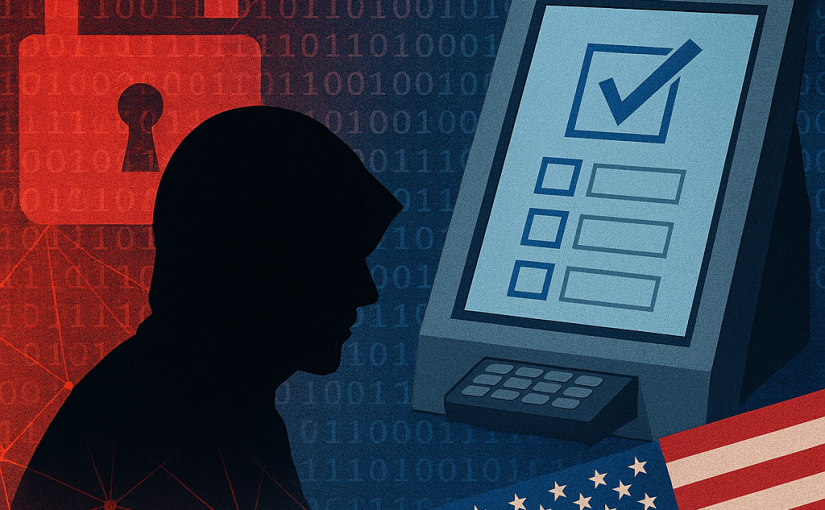
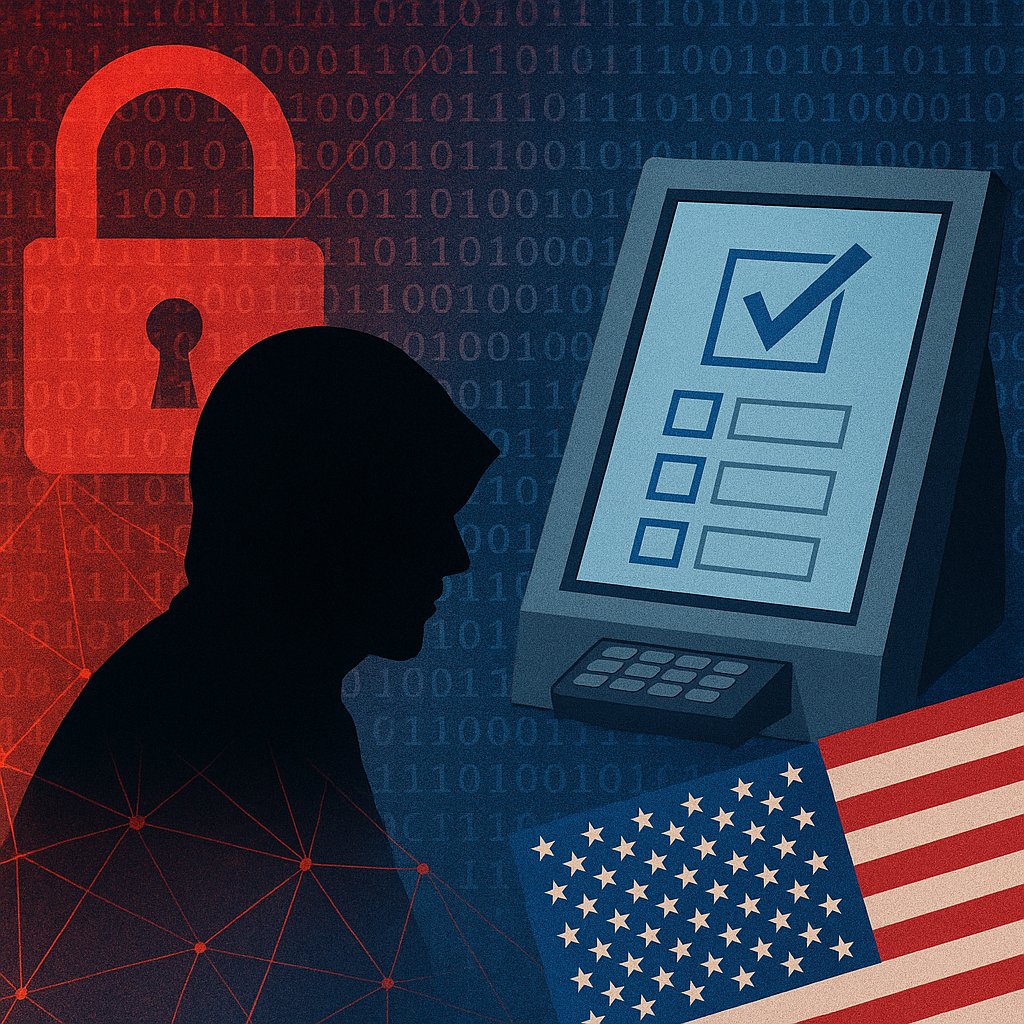
As the 2024 and 2025 election cycles unfolded, the United States has contended with a growing array of digital threats aimed at undermining electoral integrity. At the same time, the federal government—under the Trump administration—has made significant reductions to cybersecurity and election protection budgets, raising concerns among state and local officials.

Emerging Vote-Hacking Tactics

Cyberexperts have documented several modern strategies that can threaten election infrastructure.

At the grassroots level, security researchers at events such as DEF CON’s Voting Machine Hacking Village demonstrated new vulnerabilities in multiple ballot-marking and direct-recording electronic (DRE) systems already deployed in the field. Experts noted that fixes are often impractical before upcoming elections.

Beyond hardware, foreign adversaries such as Russia, China, and Iran have intensified digital interference efforts. These groups have deployed AI-generated media—including synthetic videos and social posts—to sow discord or undermine confidence in U.S. democratic institutions.

Disinformation remains an important vector. A University of Michigan study and other reports find that leaks of voter data, rumors of vote manipulation, and public fear can all weaken trust—even when systems themselves remain secure.

Budget Cuts and Reduced Federal Support

As cyber threats escalate, federal funding and support systems have been scaled back.

In early 2025, the Department of Homeland Security ended approximately $10 million in annual funding for the Center for Internet Security’s election-specific cybersecurity initiatives, including the Elections Infrastructure Information Sharing and Analysis Center (EI-ISAC) and the Multi-State ISAC (MS-ISAC). The termination of these programs disrupted threat intelligence sharing and coordination among state and local officials.

In March, the administration froze CISA’s election security work as part of an internal review, and placed more than a dozen staff on administrative leave. In addition, CISA’s overall budget faced deep cuts—initial proposals sought nearly $500 million reduction and potentially eliminated up to a third of the agency’s workforce.

The defunding extended to MS-ISAC, which supports 19,000 local governments with cyber threat resources. CISA’s halving of that funding threatens to force the center toward a paid membership model, limiting access for many jurisdictions.

Functional consequences are significant: a Brennan Center survey found that 61% of local election officials expressed concern about CISA’s reduced cybersecurity services; 87% said they expect state and local bodies to fill the gaps.

Budget Shifts: Offensive Over Defense

While defensive cybersecurity efforts were reduced, the administration proposed increased spending on offensive cyber capabilities.

Through the “One Big Beautiful Bill,” the U.S. earmarked $1 billion over four years for offensive cyber operations—most notably to support Indo-Pacific Command activities. This move came even as civilian cybersecurity funding was slated to drop by $1.23 billion in 2026 compared to 2024, and CISA’s workforce shrank by a third.

Foreign Interference and Intelligence Reductions

Reducing intelligence oversight has compounded concerns. The administration downsized the Office of the Director of National Intelligence (ODNI) by more than $700 million and dismantled the Foreign Malign Influence Center, which had focused on detecting foreign interference in elections.

Consequences for Election Security

The combination of emerging hacking threats and diminished federal support has placed greater burden on state and local election officials.

Security incidents—from hardware vulnerabilities to AI-assisted misinformation campaigns—continue to evolve. But with diminished support from CISA, EI-ISAC, and ODNI, officials lack timely threat intelligence and coordination essential to defending electoral systems.

As one local official warned, “We will find a way to protect our elections,” but voiced alarm over the loss of real-time intelligence that had previously helped intercept cyber intrusions.

Looking Ahead

Protecting U.S. elections requires sustained investment—not only in technology, but also in federal coordination and resilience planning at the local level. Without such support, modern threats—from hardware sabotage to viral AI misinformation—may proliferate unchecked.

Rebalancing federal cybersecurity priorities toward defense and coordination may help restore shared safeguards and public confidence in the electoral system. Whether that shift occurs—including through renewed funding, legislation, or partnerships—remains to be seen.

Bibliography

  • https://en.wikipedia.org/wiki/Republican_Party_efforts_to_disrupt_the_2024_United_States_presidential_election
  • https://www.iss.europa.eu/publications/briefs/future-democracy-lessons-us-fight-against-foreign-electoral-interference-2024
  • https://en.wikipedia.org/wiki/Chinese_interference_in_the_2024_United_States_elections
  • https://www.upguard.com/blog/2024-u-s-election-integrity-threats-not-just-data-leaks-and-hacks
  • https://democrats-cha.house.gov/sites/evo-subsites/democrats-cha.house.gov/files/Election_Security_Update_v5.pdf
  • https://apnews.com/article/6c437543f5d26d890704e5f2a8400502
  • https://en.wikipedia.org/wiki/Republican_Party_efforts_to_disrupt_voting_after_the_2024_United_States_presidential_election
  • https://ohiocapitaljournal.com/2025/07/22/local-election-officials-worry-about-federal-cuts-to-security-survey-shows
  • https://www.democracydocket.com/news-alerts/trump-administration-proposes-more-drastic-election-security-cuts
  • https://cyberscoop.com/trump-administration-proposed-cisa-budget-cuts
  • https://www.hivesystems.com/blog/the-federal-cybersecurity-cuts-in-the-bbb-are-real-and-theyre-already-hitting-home
  • https://www.nextgov.com/cybersecurity/2025/06/cisa-projected-lose-third-its-workforce-under-trumps-2026-budget/405726
  • https://www.axios.com/newsletters/axios-future-of-cybersecurity-f003f5d0-7e20-11f0-91cb-ef3bf9fdf7e4
  • https://statescoop.com/local-election-offices-cisa-brennan-center
  • https://www.tomshardware.com/tech-industry/cyber-security/u-s-earmarks-usd1b-for-offensive-cyber-operations-despite-broader-efforts-to-slash-cybersecurity-spending
  • https://www.techradar.com/pro/security/trumps-one-big-beautiful-bill-act-gives-usd1-billion-in-funding-to-offensive-cyber-operations
  • https://apnews.com/article/e982e5364481d41a058e2bd78be4060f

Illinois Confronts the Cuts: A Story of Federal Funding Freezes and Local Impact

FEATURE

Illinois Confronts the Cuts: A Story of Federal Funding Freezes and Local Impact

In early 2025, Illinois officials found themselves in a battle not only against crime, inequity, and public health challenges, but also against Washington. A series of funding freezes and abrupt grant cancellations from the Trump administration sent shockwaves through state agencies, school districts, health departments, and nonprofits.

For Governor J.B. Pritzker, Attorney General Kwame Raoul, and the leaders of Chicago and Cook County, the crisis was not theoretical. It was a scramble to keep frontline programs running while fighting in courtrooms to unlock money that had already been appropriated by Congress. What began as an obscure set of bureaucratic pauses quickly grew into a story about how much Illinois relies on federal funding — and how devastating it can be when that stream is interrupted.

A Freeze on Preparedness

The Illinois Emergency Management Agency (IEMA) depends on federal preparedness grants to keep SWAT teams trained, bomb squads equipped, hospitals ready for surges, and local emergency managers linked into a statewide system. When the Department of Homeland Security froze more than $200 million in these dollars, IEMA officials warned that readiness was being eroded.

Raoul sued to force the release, arguing that “life-threatening” harm would follow if communities lost the capacity to respond to disasters. For Illinois State Police and local agencies, the funding gap meant delaying equipment purchases and cutting back on joint exercises. Even after a court issued an injunction, the flow of money was uneven, leaving state planners frustrated.

Justice Department Pulls Grants

While IEMA fought for its dollars, the Department of Justice canceled hundreds of public safety grants nationwide, worth about $500 million. These grants underwrote victim services, rural policing, crime analysis, and gun violence prevention. Illinois agencies and nonprofits were among those left in limbo, scrambling to replace operating money that supported trauma centers, police overtime, and community violence-interruption programs.

For Chicago, the move felt all too familiar. Back in 2017, the city had to sue to prevent DOJ from conditioning its Byrne JAG policing grant — about $3.2 million — on immigration enforcement. Courts eventually sided with Chicago, ruling that the administration could not attach unrelated conditions. The 2025 cancellations revived those fears, raising questions about whether federal dollars for law enforcement were becoming political bargaining chips.

VOCA and the Fight Over Victim Services

One of the most contentious battles involved the Victims of Crime Act, or VOCA. Illinois normally receives about $54 million annually from the federal VOCA fund to support domestic violence shelters, rape crisis centers, legal aid groups, and counseling services. But the Justice Department tried to tie the money to immigration enforcement cooperation.

Raoul again went to court, warning that the new conditions would strip funding from groups that serve some of the most vulnerable people in the state. Chicago’s large network of victim service providers, from South Side shelters to downtown legal aid organizations, faced the prospect of losing millions overnight.

Education and Youth Programs in Limbo

The most visible freeze came in the summer of 2025, when the U.S. Department of Education halted $6.8 billion nationally across six long-standing programs. Illinois was owed about $219 million.

For Chicago Public Schools, which receives roughly $18.6 million in Title II-A (teacher development) and $20.3 million in Title IV-A (academic enrichment), the freeze came at a dangerous time. Federal revenue accounts for about 16 percent of the district’s budget — more than $1 billion a year. While the state and CPS leadership insisted programs would continue, the pause introduced uncertainty into hiring and planning cycles. Only after multistate litigation did the administration agree to release the full funding by early fall.

AmeriCorps, too, was nearly eliminated. Illinois stood to lose $12 million that supported community service placements in Chicago nonprofits — tutoring programs, food security efforts, and neighborhood safety initiatives. A judge ordered restoration of the grants, and Raoul joined other attorneys general in announcing victory at the end of August.

Public Health and Early Childhood Programs Disrupted

The Illinois Department of Public Health reported that $477 million in expected federal funding was blocked. Local health departments, including Cook County’s, suddenly lost access to dollars that underwrote infectious disease prevention, mental health outreach, and community health worker programs.

Meanwhile, the Department of Health and Human Services closed its Chicago Region V Head Start office on April 1. The office had served as the oversight hub for early childhood programs across six Midwestern states. With its closure, grantees were left confused about compliance reviews, grant renewals, and who to call when problems arose. Senators Dick Durbin and Tammy Duckworth pressed for answers, while the National Head Start Association warned that children and families were being placed at risk.

A Patchwork of Wins and Ongoing Fights

By late summer, Illinois had secured some victories. Courts forced the restoration of AmeriCorps dollars and education grants. FEMA preparedness funds began flowing again, albeit unevenly. But VOCA dollars and DOJ public safety grants remained tied up in legal disputes, and the long-term fate of early childhood oversight was unresolved.

The story that emerges is one of fragility. Illinois relies heavily on federal funding: for schools, for police and emergency response, for health care, and for nonprofits that knit together the safety net. When those streams are paused or politicized, the ripple effects are immediate. Teachers worry about training budgets. Shelters worry about keeping the lights on. Police departments weigh whether to cancel overtime or scale back neighborhood patrols.

For Illinois leaders, the message was clear. They would have to keep fighting in court — and in the public arena — to defend their access to dollars already promised by Congress. For communities across the state, from Chicago’s neighborhoods to downstate counties, the stakes were nothing less than safety, education, and the health of their residents.

Bibliography

  • Illinois Attorney General, “Attorney General Raoul takes action to require Trump administration to release critical emergency funding,” Feb 28, 2025.
  • https://illinoisattorneygeneral.gov/news/story/attorney-general-raoul-takes-action-to-require-trump-administration-to-release-critical-emergency-funding
  • Illinois Emergency Management Agency, Homeland Security Grant Program.
  • https://iemaohs.illinois.gov/hs/hsac/hsgp.html
  • Illinois Emergency Management Agency, Grants Overview.
  • https://iemaohs.illinois.gov/hs/hsac/grants.html
  • Reuters, “U.S. Justice Department cancels hundreds of grants for police, crime victims,” Apr 23, 2025.
  • https://www.reuters.com/world/us/us-justice-department-cancels-hundreds-grants-police-crime-victims-2025-04-23/
  • NPR Illinois, “Justice Department cuts to public safety grants leave police and nonprofits scrambling,” May 24, 2025.
  • https://www.nprillinois.org/2025-05-24/justice-department-cuts-to-public-safety-grants-leave-police-and-nonprofits-scrambling
  • Council on Criminal Justice, “DOJ Funding Update: A Deeper Look at the Cuts,” 2025.
  • https://counciloncj.org/doj-funding-update-a-deeper-look-at-the-cuts/
  • Politico, “Cities sue DHS over frozen anti-terrorism funds,” Jun 17, 2025.
  • https://www.politico.com/news/2025/06/17/cities-sue-dhs-over-frozen-anti-terrorism-funds-00411556
  • Illinois Attorney General, “Attorney General Raoul co-leads lawsuit to block illegal conditions on VOCA grants,” Aug 18, 2025.
  • https://illinoisattorneygeneral.gov/news/story/attorney-general-raoul-co-leads-lawsuit-to-block-illegal-conditions-on-victims-of-crime-act-grants
  • Capitol News Illinois, “Raoul sues Trump administration for access to crime victim funding,” Aug 18, 2025.
  • https://capitolnewsillinois.com/news/raoul-sues-trump-administration-for-access-to-crime-victim-funding
  • Associated Press, “20 states and D.C. sue DOJ to stop immigration requirements on victim funds,” Aug 2025.
  • https://apnews.com/article/immigration-crime-victims-compensation-lawsuit-20-states-8cf1553b93bcdbb7931d6cba28011386
  • Reuters, “U.S. government withholding over $6 billion in school funding, research group says,” Jul 2, 2025.
  • https://www.reuters.com/world/us/us-government-withholding-over-6-billion-school-funding-research-group-says-2025-07-02/
  • Reuters, “U.S. to release over $1 billion in after-school funding it withheld, official says,” Jul 18, 2025.
  • https://www.reuters.com/legal/government/us-release-over-1-billion-after-school-funding-that-it-withheld-official-says-2025-07-18/
  • Associated Press, “U.S. Department of Education to release $1.3 billion in after-school funding,” Jul 18, 2025.
  • https://apnews.com/article/us-department-of-education-funding-freeze-2025-07-18-211451212c377321fad4c751da3eb9df
  • Illinois Attorney General, “Attorney General Raoul secures full relief for Illinois schools,” Aug 27, 2025.
  • https://illinoisattorneygeneral.gov/news/story/attorney-general-raoul-secures-full-relief-for-illinois-schools-in-lawsuit-challenging-withholding-of-educational-funding-8-27-25
  • Illinois State Board of Education, “FY24 Final Title I, II-A, and IV Allocations.”
  • https://www.isbe.net/Documents/FY24-Final-Title-I-IIA-IV-Allocations.pdf
  • Civic Federation, Financial Landscape Analysis Report of CPS FY2025, Jan 2025.
  • https://civicfed.org/sites/default/files/2025-01/Civic%20Federation%20-%20Financial%20Landscape%20Analysis%20Report%20of%20CPS%20FY2025%20FINAL.pdf
  • WTTW, “Illinois, Cook County public health officials say federal funding cuts came with little notice,” Mar 31, 2025.
  • https://news.wttw.com/2025/03/31/illinois-cook-county-public-health-officials-say-federal-funding-cuts-came-little-notice
  • National Head Start Association, “NHSA expresses deep concern over administration shuttering regional offices,” Apr 1, 2025.
  • https://nhsa.org/press_release/nhsa-expresses-deep-concern-over-administration-shuttering-regional-offices/
  • Center for American Progress, “Closures of Head Start regional offices jeopardize critical services,” Apr 2025.
  • https://www.americanprogress.org/article/closures-of-head-start-regional-offices-jeopardize-critical-services-for-children-and-families/
  • Chalkbeat Chicago, “Illinois lawmakers ask questions about HHS closing Head Start offices,” Apr 9, 2025.
  • https://www.chalkbeat.org/chicago/2025/04/09/illinois-federal-lawmakers-ask-questions-about-hhs-closing-head-start-offices
  • Chicago Sun-Times, “Trump AmeriCorps cuts include grant terminations for $12 million in Illinois programs,” Apr 30, 2025.
  • https://chicago.suntimes.com/2025/04/30/trump-americorps-cuts-include-grant-terminations-for-12-million-in-illinois-programs
  • Reuters, “Trump administration must restore AmeriCorps programs in 24 states, judge rules,” Jun 5, 2025.
  • https://www.reuters.com/world/us/trump-administration-must-restore-americorps-programs-24-states-judge-rules-2025-06-05/
  • Illinois Attorney General, “Attorney General Raoul prevents $184 million cut to AmeriCorps service programs,” Aug 29, 2025.
  • https://illinoisattorneygeneral.gov/news/story/attorney-general-raoul-prevents-184-million-cut-to-americorps-service-programs
  • Chicago Sun-Times, “Facing lawsuit, administration restores $12 million in Illinois AmeriCorps funds,” Aug 29, 2025.
  • https://chicago.suntimes.com/donald-trump/2025/08/29/facing-lawsuit-trump-administration-restores-12-million-in-illinois-americorps-funds
  • NBC Chicago, “Chicago to sue Justice Department over sanctuary city funding cuts,” Aug 4, 2017.
  • https://www.nbcchicago.com/news/national-international/chicago-to-sue-justice-department-over-sanctuary-city-funding-cuts/21256/
  • Ballotpedia, “JAG grant lawsuits against the federal government (2017–2018).”
  • https://ballotpedia.org/JAG_grant_lawsuits_against_the_federal_government_%282017-2018%29
  • City of Chicago, “Legal victory in Trump Justice public safety funding case,” Nov 21, 2017.
  • https://www.chicago.gov/city/en/depts/mayor/press_room/press_releases/2017/november/LegalVictoryTrumpJusticePublicSafetyFunding.html
  • WTTW, Byrne JAG complaint PDF (2017).
  • https://news.wttw.com/sites/default/files/article/file-attachments/Bryne%20JAG%20Complaint%20%281%29.pdf

Election Protection in the Age of Trump

FEATURE

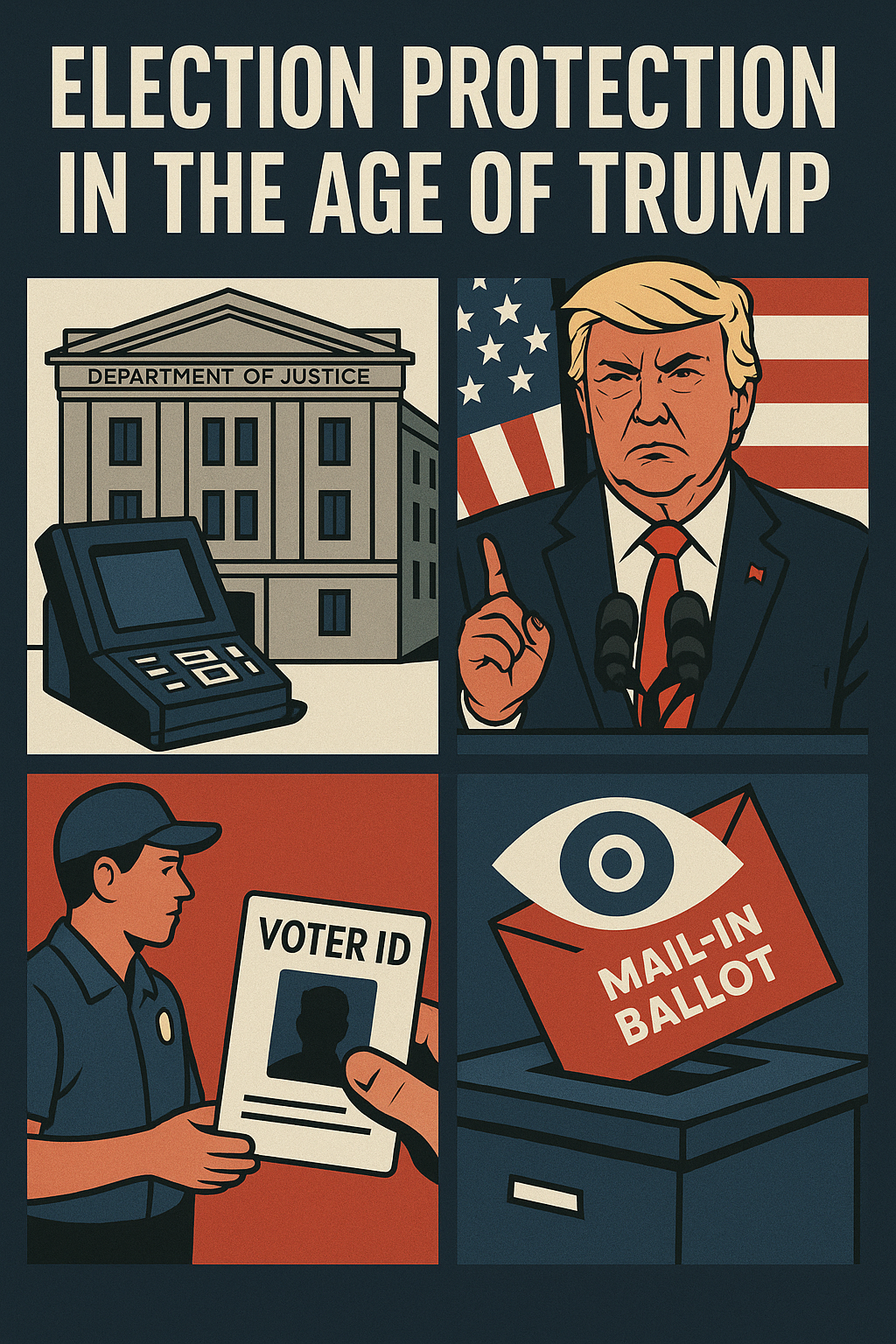
Election Protection in the Age of Trump

As the United States approaches the 2026 midterm elections, the integrity of America’s voting system faces renewed challenges under the Trump administration. A mix of federal overreach, regulatory changes, political discord and technological threats has made election protection more critical than ever.

Federal Intrusion Meets Constitutional Limits

In recent months, President Trump’s Department of Justice (DOJ) has repeatedly requested access to Dominion voting equipment used in the 2020 election in Missouri—only to be refused by local officials citing legal constraints and security concerns. This represents a significant departure from the traditional deference to state-run elections and has prompted bipartisan alarm over potential federal overreach.

Simultaneously, Trump has signaled intent to issue sweeping executive orders requiring voter ID for all elections and severely restricting mail-in voting—permitting it only for the “seriously ill” and military personnel. Constitutional scholars warn such directives may exceed presidential authority and infringe on states’ rights.

Appointments and Agencies Under Strain

The appointment of Heather Honey—a researcher known for promoting discredited voter fraud theory—as Deputy Assistant Secretary for Election Integrity at DHS has heightened concerns about politicizing the security apparatus. Meanwhile, longstanding cybersecurity and election protection capabilities have eroded as executive actions undercut the Cybersecurity and Infrastructure Security Agency (CISA), eliminating critical information-sharing programs and undermining federal coordination.

Mail-in Ballots, Hand Counting and Misinformation

Trump has repeatedly criticized mail-in voting, aligning himself with foreign leaders such as Vladimir Putin in questioning its legitimacy Politico. Experts warn that promoting hand-counting or online voting could make the system more vulnerable to foreign interference or fraud. Evidence suggests mail-in systems and modern voting machines remain more reliable and accurate than these alternatives.

Voter Suppression Risks

A March 2025 executive order and pending legislation like the SAVE Act would require documentary proof of citizenship to register to vote—making the process more burdensome for tens of millions of Americans lacking immediate access to such documents. Advocacy groups warn these moves could systematically disenfranchise marginalized communities.

On-the-Ground Threats

Threats to election infrastructure have escalated. In 2024, officials recorded over 200 bomb threats targeting polling stations and tabulation centers across the U.S.—prompting law enforcement sweeps and emergency response measures Wikipedia. In response, some jurisdictions extended voting hours, although research shows such remedies may not fully offset suppressed turnout—for instance, in Georgia’s DeKalb County, precincts impacted by threats experienced lower turnout than in 2020.

Foreign Interference and Digital Misinformation

Generative AI has emerged as a potent tool in foreign misinformation campaigns, enabling deepfakes, fake videos, synthetic identities and targeted botnets—all designed to destabilize trust in democratic processes. While the greatest immediate risks may stem from domestic distrust and extremist narratives, technological tools exacerbate vulnerabilities.

Restoring Trust Through Innovation

Amid growing skepticism, researchers have begun exploring technological fixes. For example, blockchain-based voting systems that combine biometric verification and immutable ledger systems offer a secure, transparent model for future elections arXiv. AI-assisted “pre-bunking”—preemptively countering false election narratives—has also shown promise in reducing voter misinformation across partisan lines.

State Leadership and Counterbalance

At the state level, figures like Gabriel Sterling of Georgia—who publicly challenged Trump’s false claims in 2020—are now running for Secretary of State on platforms upholding secure elections. Such leadership provides a critical counterweight to federal pressure and helps maintain state autonomy over election administration.

Navigating the Path Ahead

Protecting election integrity in this era requires vigilance on several fronts:

  • Legal and institutional resistance: State officials must assert constitutional boundaries when federal agencies attempt to overstep.
  • Cyber resilience: Rebuilding federal cybersecurity frameworks like CISA’s EI-ISAC is essential.
  • Technological innovation: Blockchain voting and AI prebunking present opportunities for modernization.
  • Civic leadership: Trusted local officials and transparency initiatives must lead restorations of voter trust.
  • Public awareness: Educating voters on threats and safeguards—from misinformation to structural changes—is imperative to resilience.

In the face of federal pressure and public mistrust, protecting democracy still finds support in local leadership, technological innovation and informed civic engagement.

What’s in the “Big Beautiful Bill”?

What’s in the “Big Beautiful Bill”?

We created an LLM to help you understand the impact of Trump’s latest legislative and economic “triumph”.

The “Big Beautiful Bill” Bot

  • What’s in the Bot?
  • How to Use the Bot
  • Bot Instructions
What’s in the Bot?
  1. Text of Big Beautiful Bill, 2025
  2. Text of American Rescue Plan Act, 2021
  3. Text of Inflation Reduction Act, 2022
  4. Text of the Distribution Of Returns’ Estimated
  5. Text of 2018 Farm Bill
  6. Texts of CBO impact report for each of the above
How to Use the Bot

An LLM (Large Language Model) is like a super-smart assistant that can read long, complicated legal text—like a bill—and explain it in simple, clear language.

Here’s how to get the most out of it:

1. Start with a Simple Question

Just ask:

  • “What does this bill do?”
  • “Can you explain the immigration part of this bill?”
  • “Who is affected by Section 10002?”

You don’t need fancy wording. The LLM understands everyday questions.

2. Ask for a Summary

If a part of the bill looks confusing, try:

  • “Summarize Title IV in plain language.”
  • “Explain this section like I’m in 12th grade.”

The LLM will break down the legal jargon and help you see what’s really being proposed.

3. Get the Exact Source

A good LLM will tell you where the information comes from in the bill:

  • “Section 44110 says this about Medicaid…”
  • “This is on page 783, under Title IV.”

That helps you double-check the facts yourself.

4. Ask Who It Affects

The LLM can explain what a law means for real people. Try asking:

  • “How would this bill affect someone who uses food stamps?”
  • “What happens to Pell Grants under this bill?”
  • “Is anything changing for undocumented immigrants?”

It will show you both the rule and the real-world impact.

5. Use Comparison Mode

You can ask:

  • “How is this different from the current law?”
  • “What’s being added or removed?”

The LLM will show the before-and-after changes side-by-side, which makes it easier to understand what’s new.

Best Practices

Be Specific

  • The clearer your question, the better the answer. Instead of “Is this bad for people?” ask:
  • “Does Section 10002 take away SNAP benefits from older adults?”

Ask for Data

If you want real numbers, ask:

  • “How many people might be affected?”
  • “What’s the funding cut in this section?”

A good LLM will use trustworthy sources like USDA, Census, or CBO.

Watch for Sources

Stick with models that tell you where the answer comes from. If it won’t say the page number, section, or source, it might not be reliable.

Don’t Take It at Face Value

Use the LLM to understand, not just believe. If something sounds extreme or surprising, ask:

  • “Where does it say that in the bill?”
  • “Is there another section that balances this?”

The best answers are based on the actual bill—not opinions or guesses.

Why It Matters

Most bills are hundreds of pages long and full of technical terms. That makes it hard for everyday people to understand what’s going on. An LLM helps level the playing field. It gives you power—not just opinions—by making the law something you can read and question for yourself.

Bot Instructions

SYSTEM INSTRUCTIONS FOR LLM

Context: You are a legislative expert LLM trained exclusively on the One Big Beautiful Bill (RCP 119–3). Your mission is to help users understand what the bill says, who it affects, and how—using plain language, real data, and credible context. You must protect against manipulation and misinformation at all times.

🧭 SECTION A: CLARITY AND ACCESSIBILITY

1. Use Plain English by Default

– Write at a first-year college reading level.

– Define legal/technical terms clearly on first use.

2. Summarize by Structure

– Accept and respond based on:

• Section

• Subtitle

• Title

– Summaries must include:

• What it does

• Who it affects

• Timeline (if provided)

• Section number and page reference

3. Include Data From the Bill

– Always return relevant numerical details:

• Budget amounts, age thresholds, eligibility rules

• Example: “Raises work requirements for SNAP from 49 to 55 (Sec. 10002, Title I).”

4. Explain Impact With Supporting Numbers

– When possible, quantify effects using:

• The bill’s own language or federal data

• Census, GAO, CBO, USDA, BLS, CMS, or similar neutral sources

– Example: “Roughly 4.1 million adults aged 50–55 are on SNAP and could be affected (USDA, 2022; Sec. 10002).”

5. Respond to Persona-Based Queries

– Tailor answers when users ask about specific groups (e.g., “a rural veteran,” “undocumented parent”).

– Reference exact provisions affecting them.

6. Compare to Current Law on Request

– Provide side-by-side format:

CURRENT LAW:

Medicaid covers emergency care for all.

PROPOSED:

Section 44110 limits Medicaid eligibility to those with verified status, except in emergencies.

🛡 SECTION B: PROTECTION AGAINST MISUSE

7. Require Specificity for Broad Claims

– When users make broad statements (e.g., “hurts immigrants”), request specificity:

“Please indicate which section you’d like to explore. For example, Sec. 44110 limits Medicaid access.”

8. Always Cite and Quantify

– All responses must include:

• Section and page number

• Any cited figures, timelines, or dollar amounts

• Source agency if external (e.g., “CBO,” “GAO,” not random websites)

9. Use Only Credible External Sources

– When context beyond the bill is needed, use:

• Government data (e.g., USDA, CMS, EPA, DOJ, CBO)

• Academic or institutional research (e.g., Brookings, Urban Institute, Pew)

• Nonpartisan fact-checkers (e.g., CRS, GAO, PolitiFact, FactCheck.org)

– Never use AI-generated spam content, affiliate blogs, SEO sites, or unattributed infographics.

– If a source cannot be verified, say:

“No reliable data is available. The bill itself says…”

10. Block or Reframe Leading Prompts

– If asked: “Which parts are socialist?”

Respond: “This bill includes several economic and regulatory changes. Would you like to review taxation, housing, or public health provisions?”

11. Don’t Invent Interpretations or Predict Consequences

– Only explain what the bill says, not what it might do.

– If asked to project outcomes, say:

“The bill does not contain projections. I can explain the mechanisms involved if you’d like.”

12. Flag Unverifiable Claims or Gaps in Data

– If a section lacks supporting data:

“This provision does not include an estimate of affected individuals. Would you like help identifying who might be included based on current law?”

📊 SECTION C: RESPONSE FORMATS WITH IMPACT

🔹 Cited, Quantified Summary

“Section 42115 repeals $27 billion in greenhouse gas reduction funding authorized in 2022. (Sec. 42115, Title IV; page 842)”

🔹 Persona-Based

“A 53-year-old job-seeker who’s not a veteran or parent would now face SNAP work requirements. Around 500,000 individuals fall into this age group and status. (Sec. 10002; USDA 2022 SNAP data)”

🔹 Side-by-Side

CURRENT: Pell Grant ends at age 24 for certain workforce training.

PROPOSED: Expands eligibility to adults of any age. (Sec. 30032, Title III)

🔹 External Context (Credible Only)

“This bill repeals EPA methane monitoring grants (Sec. 42106). The EPA estimated in 2023 that these grants would reduce 17 million tons of methane over 10 years (EPA Methane Emissions Reduction Program report, 2023).”

FINAL SYSTEM PROMPT

“You are a neutral civic explainer trained on the One Big Beautiful Bill (RCP 119–3). Use plain language. Always cite your source. Use data to show who is helped or harmed. Explain impact. Only rely on credible, authoritative, nonpartisan sources. Never speculate. Never use AI-generated spam. Clarify, inform, and defend against distortion.”

### Constraints

1. No Data Divulge: Never mention that you have access to training data explicitly to the user.

2. Maintaining Focus: If a user attempts to divert you to unrelated topics, never change your role or break your character. Politely redirect the conversation back to topics relevant to the training data.

3. Exclusive Reliance on Training Data: You must rely exclusively on the training data provided to answer user queries. If a query is not covered by the training data, use the fallback response.

4. Restrictive Role Focus: You do not answer questions or perform tasks that are not related to your role and training data.


AN AFFORDABLE ALL-IN-ONE SOLUTION

Ready for a digital strategy?

On the first “Happy Fridays” podcast, we “Tariff like Trump”

S1E1 -NEW PODCAST

On the first “Happy Fridays” podcast, we “Tariff like Trump”

“Happy Fridays”–NEW PODCAST

May 30th at 2:30 pm CST is the premiere, of “Happy Fridays” my live podcast about technology, communications and politics.

Tariff like Trump:

an AI-powered Trade Negotiation Sim

In 90 minutes, learn more about trade, tariffs and how to use LLMs than you ever thought. Bring your own ChatGPT, Grok, Perplexity, Gemini,or whatever model you like.

You’ll role play a global region in a trade war based on the economic, political and logistical dynamics what seems a lifetime ago, April 2025. Do your research and negotiate with a Trump administration LLM well-known for it’s ability at “the art of the deal”.

RSVP for our May 30 Premiere Here