

 Sebastian James
Key takeaways
- A rumor in motion has its own shape: one link, many accounts, mostly copy-paste, fast, then quiet.
- One voter-registration fraud link produced 62 posts from 60 accounts on 5 platforms, 47 of them on Gab, and peaked within two days.
- Copy-paste leaves fingerprints. A typo traveled with the link from platform to platform.
- A shape tells you where to look, not whether a claim is true. The question that matters is what would settle it.
One link claiming that nine of 10 voter registrations arriving at clerks’ offices are fraudulent reached 60 accounts on five platforms in two days, then went silent. Its shape looks like nothing else in the election conversation, and that is how you can spot it before you judge the claim.
In Part 1, we laid out three everyday shapes of election posting: a candidate talking to voters, a news robot and a headline machine. Those are the background. This installment covers the fourth shape, the one that matters most two weeks before Election Day: a rumor in motion.
As in Part 1, the data comes from four FC26 reports generated Oct. 18, 2026, covering 30 days of public election posts on Bluesky, the Fediverse, Gab, Gettr, Truth Social, Telegram, 4chan and Disqus. FC26 counts behavior, not beliefs. Nothing here implies wrongdoing by any account.
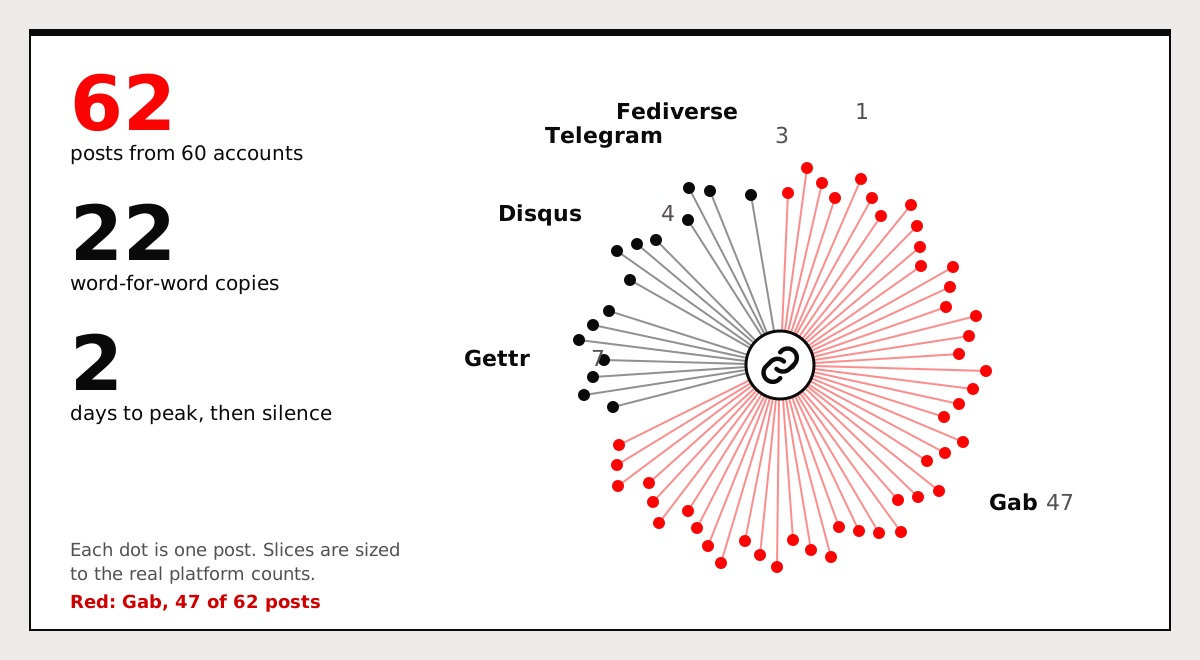
Shape 4: A link that traveled
The claim: “Nine of ten voter registrations arriving at clerks’ offices are fraudulent,” from an article on thegatewaypundit.com.
- Speed: the first copies appeared within 6 minutes of the original posts.
- Volume: 62 posts from 60 accounts. 22 of them were word-for-word copies.
- Where: 47 posts on Gab, 7 on Gettr, 4 on Disqus, 3 on Telegram and 1 on the Fediverse.
- Life span: it peaked within two days, then went quiet.
- Fingerprints: a typo, “regisrations,” traveled with it from platform to platform. A Japanese translation appeared along the way.
- Context: 287 different accounts shared links from the same site that month.
The shape: a classic flare. Source, burst, copy-paste wave, quiet.
Compare it with Part 1. A candidate posts six different messages over a month. A news robot tags every election story the same way. A headline machine repeats one headline with new links. This link did something none of them do: it jumped across five platforms, mostly as identical text, and burned out in two days. The typo is the giveaway. People retelling a claim in their own words tend to fix spelling. Copy-paste carries mistakes along.
All four shapes, side by side
| Trait | Candidate talking | News robot | Headline machine | Link flare |
|---|---|---|---|---|
| What it is | Human communication | Hashtag feed | Headline + link repeater | Viral link burst |
| Volume | 6 posts | 14 posts | 36 posts | 62 posts, 60 accounts |
| Posts with 4+ hashtags | 0 of 6 | 14 of 14 | 32 of 36 | Near 0 of 62 |
| Uses own words | All 6 | None | Headline + link | Mostly copy-paste |
| Active hours | 5 of 24 | 8 of 24 | 17 of 24 | 2 days, then silence |
| Connections | 55 (mentions) | 31 (hashtags) | 85 (hashtags) | 31 (shared it) |
| Automation hints | 0 of 9 | 1 of 9 | 1 of 9 | n/a (a link) |
Source: 4 FC26 reports generated Oct. 18, 2026, 30-day window.
Read across the bottom rows. The three everyday shapes are accounts with habits. The flare is not an account at all. It is a link moving through other people’s accounts, which is why automation hints don’t apply to it.
What would settle this?
A flare tells you where to look. It does not tell you whether the claim is true. A link copied 60 times is not automatically false, and a link nobody shares is not automatically true.
So the useful question is always the same: what would settle this? For election claims, the answer is usually a public record and a person whose job is to keep it.
- A voter-fraud claim is settled by public records and the clerks who process registrations.
- A claim about a candidate’s policy is settled by bill text, votes and the candidate’s own published positions.
- A claim about something a candidate said is settled by their official channel or a trusted reporter who was there.
FC26’s job ends where verification begins. It shows what is moving and how far, so the person who can check it knows where to look.
Before you share an election post
Ask one question: what shape is this?
- A person? Varied words, varied timing, real conversation. Engage respectfully, and verify through trusted channels.
- A news robot? Hashtags, links, no sentences. Trace it to the original source, and check what context was lost.
- A headline machine? Same headline, new link, over and over. Find the original wire story, and note the timing.
- A link flare? One link, many accounts, copy-paste, fast. Follow it to the origin, and ask what would settle it.
Shape decides your next move. Not opinion, not emotion, not vibe.
The bigger point
In the last two weeks of an election, the rumors that matter are the ones about registering, voting and counting. This one followed a pattern you can learn: a source, a burst, a copy-paste wave, then quiet. By the time a fact-check runs, a two-day wave can already be over. Seeing the shape early is how you get there first.
What shape is the conversation about your race?
Digital Strategy Group runs election narrative scans for candidates, campaigns and organizations. We show you what is moving, how far and what to do about it. Or call or text 773-879-3538.
Email me about a narrative scan